
Classrooms are workplaces for listening
Education projects in Queensland increasingly pair flexible layouts with hard surfaces that look great on renders but punish speech intelligibility once thirty students occupy a room. At Carval Interior Lining we see the same post-occupancy story: teachers raising their voices, assistive listening devices working harder than necessary, and facility managers asked to fix a problem that should have been resolved at ceiling specification.
Acoustic performance is not a single product choice. It is the relationship between tile absorption, ceiling height, return air paths, and the partition height that stops sound leaking over walls. When a school brief treats ceilings as a commodity line item, contractors are forced to swap tiles late in the programme without revisiting partition extents—a compromise that rarely ends well.
Specify the outcome, not just the NRC figure
We encourage consultants to state the activity type per room cluster—general learning, performing arts, STEM labs with equipment noise—and to align those clusters with tested systems our installers can build repeatably. That includes suspension load limits for future services, access panels where filters must be changed, and clear documentation for maintenance crews who will live with the ceiling for decades.
Carval Interior Lining has delivered multiple education packages across South East Queensland where holiday access windows are tight. Early involvement lets us flag grid clashes with existing structure, coordinate bulkheads with data cabling routes, and keep acoustic ceilings installable within the same programme as partition works—avoiding the costly revisit when walls are already painted.
Our viewpoint
Treat acoustic ceilings as part of the pedagogical fit-out, not a finishing trade. The incremental cost of correct specification is small compared with remedial works, teacher fatigue, and reputational risk for departments advertising modern learning environments. If you are briefing a campus refurbishment, bring your lining contractor into the design development stage—we will show you where real-world installations diverge from catalogue assumptions.
Specify the room activity first; the ceiling system should follow teaching outcomes.

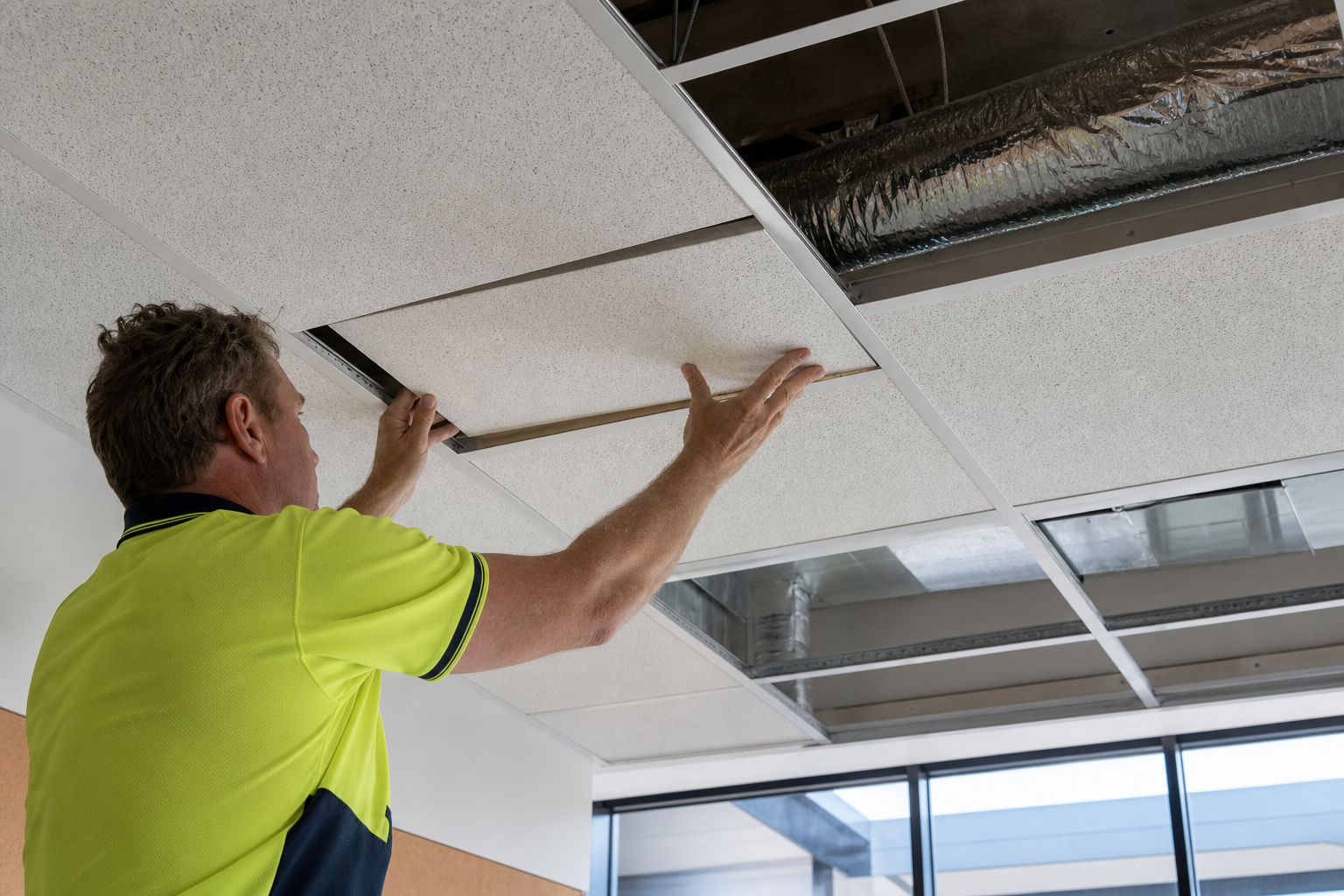
Discuss your brief
Share room clusters, holiday access windows, and consultant acoustic schedules when you brief us.
Contact Carval Interior Lining on 07 2110 8510 or support@carvalinteriorlining.com with drawings and programme dates.
Questions on this topic
Should NRC be the only ceiling criterion?
No. State room activity, partition height, and services paths matter as much as absorption—specify the listening outcome, not a single number.
Can tiles be swapped late without revisiting partitions?
Rarely. Late tile substitution often ignores sound paths over walls—involve the lining contractor before walls are painted.